

Are your trainers starting to look less than pristine? Are they still grimy, even after you’ve given them a wash in the sink? Then it could be time to use your washing machine to get them looking squeaky clean. First things first…
Can you put all trainers in the washing machine?
The answer is yes, most of the time. But it’s important to note that not all trainers are suitable for this type of cleaning. It all depends on the materials they’re made from, and how they’re designed and constructed.
So, here’s what’s safe – and not so safe – to pop in your washing machine…
Usually safe to machine wash:
Canvas trainers.
Mesh running shoes.
Flyknit trainers.
Polyester and synthetic fabric shoes.
Most everyday sports trainers.
Avoid machine washing:
Real leather trainers.
Suede shoes.
Silk or satin footwear.
Shoes with sequins, studs or embellishments.
Trainers with glued decorative details.
Expensive designer footwear.
Before you even think about opening your washing machine, check the manufacturer’s care instructions (they’ll have come with your trainers). They should include detailed instructions for cleaning the shoes, and whether they’re suitable for a spin in the washing machine. If they are… let’s get started.

Best washing machine settings and temperature for trainers
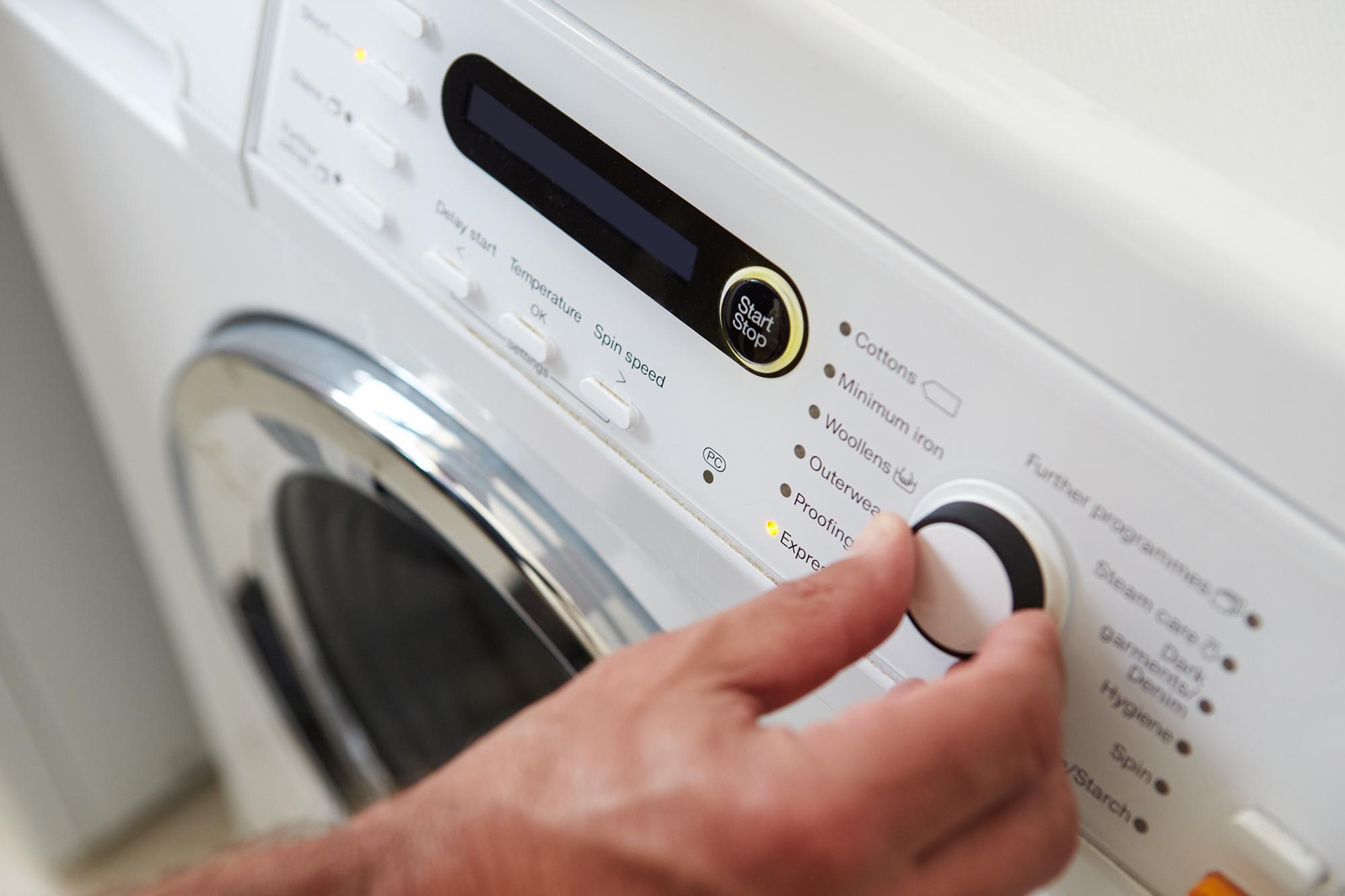
Choosing the right setting is one of the easiest ways to prevent damage when you’re cleaning trainers in a washing machine.
Water temperature: cold wash or up to 30°C
Heat can weaken glue, fade colours and even warp certain materials. Stick to a cold wash where you can, or a max temperature of 30°C.
Wash cycle: delicate or gentle setting
Select a delicate, hand-wash or wool cycle if your machine has one. These programmes use gentler drum movements that are much kinder to your shoes. If you’re not sure, our guide to washing machine settings will help you choose the right one.
Spin speed and wash duration: keep both low
High spin speeds might put extra strain on your trainers and the washing machine drum. Use a low spin setting or switch spinning off altogether if possible. A shorter cycle or one of your machine’s quick wash cycles are often all that’s needed.
How to wash trainers in a washing machine: a step-by-step guide
Here’s the best way to get your shoes lookin’ good as new…
Check the care label – Always start by checking the manufacturer’s cleaning instructions. If machine washing isn’t recommended, stick to hand cleaning.
Remove the laces and insoles – Take out the laces and insoles before washing. This helps the shoes get cleaned more evenly and stops dirt from getting trapped inside.
Brush off dirt and mud – Let any mud dry first, then brush it away with an old toothbrush or a soft cleaning brush. Removing loose dirt helps to keep your washing machine cleaner too.
Put trainers in a mesh bag or pillowcase – Pop your trainers inside a mesh laundry bag or an old pillowcase. Then add a couple of towels to the wash. All of this cushions the shoes and balances the load – which also reduces noise and impact inside the drum.
Add detergent – Use a normal liquid detergent and avoid bleach unless the manufacturer specifically recommends it. Liquid detergent tends to dissolve more easily on cooler washes.
Run a cold, delicate cycle – Set the machine to a cold or 30°C wash on a gentle cycle and let it do the work. Once it’s done, remove the trainers straight away so they’re ready for drying.
How to wash white trainers and fabric shoes
White trainers always seem to attract dirt faster than any other colour. While you can wash lots of white canvas, cotton mesh and running shoes in the washing machine, you’ll usually get the best results by treating any stains before washing.
Start by brushing off loose dirt. Then make a small solution of warm water and mild detergent and use a soft toothbrush to gently scrub stained areas. This works especially well on white rubber soles and fabric uppers.
For white canvas shoes and fabric trainers:
Spot-treat stains before washing.
Gently scrub problem areas with a toothbrush.
Use a cold wash cycle if machine washing.
Wipe away excess moisture afterwards with a microfibre cloth.
Avoid bleach, which can cause yellowing over time.
Tech tip: Running shoes with breathable mesh panels should be treated especially carefully, as aggressive scrubbing can damage the fabric. Gentle cleaning is usually the safest approach.

How to dry trainers safely (and why you shouldn’t use a tumble dryer)
Once your trainers are clean, drying them correctly is just as important as washing them.
Stuff the inside of each shoe with newspaper, kitchen roll or microfibre towels. This’ll help to absorb moisture and keeps the trainer’s shape while they dry. Remember to replace the paper or towels every few hours if they start to get too damp.
For the best results, leave your trainers to air dry in a warm, well-ventilated room. Try to keep them away from direct sunlight, radiators and other heat sources, as too much heat can damage adhesives and deform some materials.
Can you put trainers in the tumble dryer?
In most cases, no. While it might be tempting to speed things up, putting trainers in tumble dryers isn’t recommended.
The heat inside a tumble dryer can:
Shrink fabric materials.
Warp the shape of the shoe.
Damage cushioning.
Weaken adhesives.
Melt certain synthetic materials.
Air drying does take longer. But it’s far safer and helps your trainers to last longer.
Will washing trainers damage your washing machine
Lots of people worry that washing shoes is going to damage their appliance. Well, it can if you don’t wash them correctly. Heavy trainers can bang against the drum during the cycle, potentially damaging the drum paddles. They can also create an unbalanced load or even trigger an error message on some machines.
To reduce the risk:
Wash only one pair of trainers at a time.
Always use towels to cushion the load.
Place trainers inside a laundry bag or pillowcase.
Use a gentle cycle with a low spin speed.
If your machine always struggles with unbalanced loads, or is showing signs of wear, it’s good to learn a bit more about when to replace your washing machine. It’s also worth checking our washing machine capacity guide to make sure you’re loading your appliance properly.
Need any more help?
Is it time to replace your washing machine? If you’d like expert advice on choosing the best appliance for your home, read our washing machine buying guide or pop-in store and chat to one of our colleagues.