


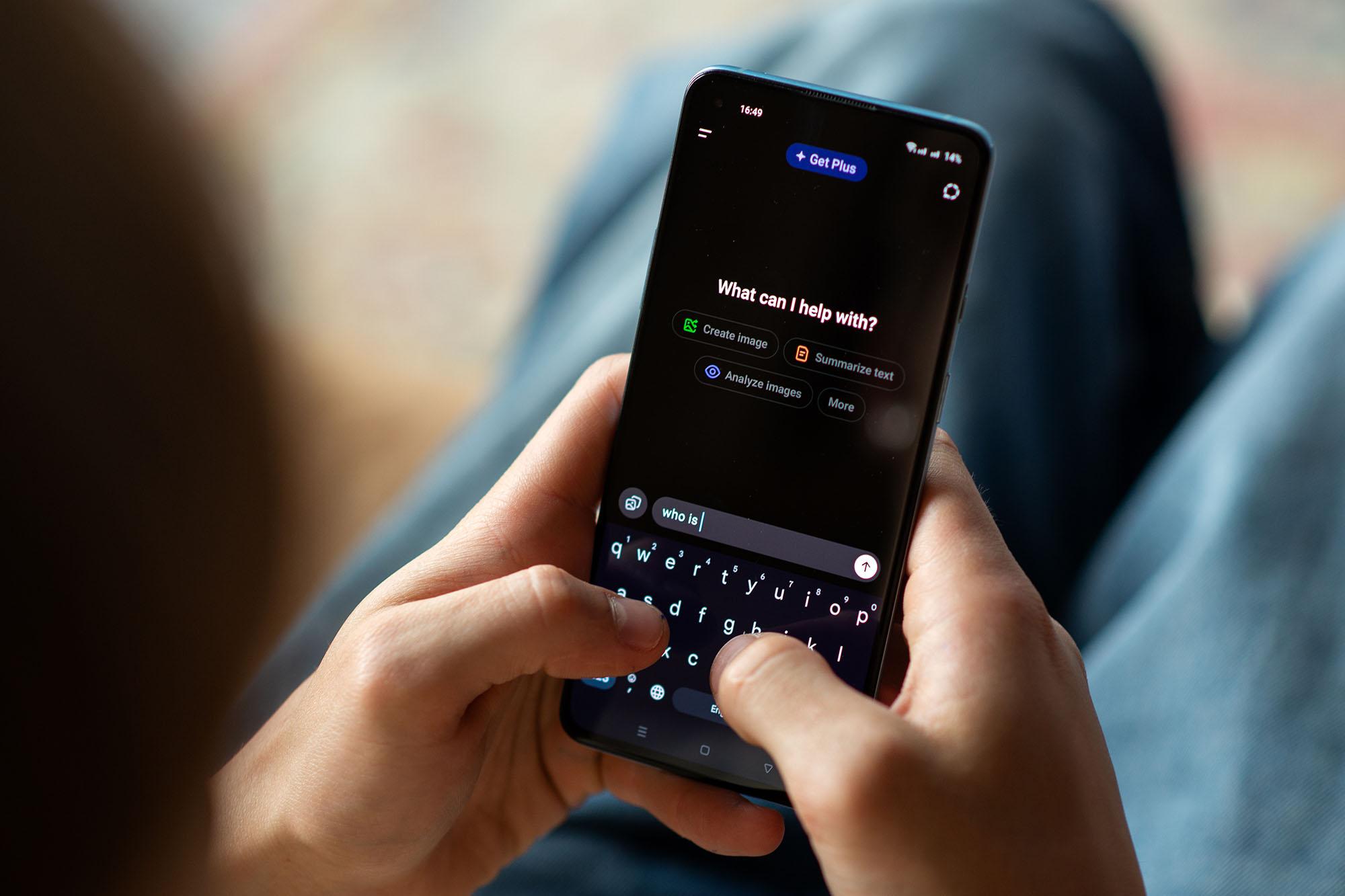
Artificial intelligence is quickly becoming part of everyday life. In fact, UK Government research suggests that around three-quarters of people have already used AI. That includes chatbots, AI-powered smartphones, smart home devices, plus the latest AI laptops and Copilot+ PCs.
But as AI becomes more popular, more questions are being raised about its energy use. You might’ve seen claims that AI consumes lots of electricity, but the reality isn’t as simple. How much energy AI uses depends on the type of AI, how it's being used and where the processing takes place.
To put AI's energy use into perspective, let's explore how much power AI uses, where it's consumed and how the industry is working to reduce its environmental impact.

Why does AI need so much computing power?
Traditional search engines mainly retrieve existing information. But AI chatbots analyse your prompt and use patterns learned during training to generate a tailored response. To do this, they perform billions of calculations behind the scenes, which is why AI needs far more computing power than just looking up information.
Many AI tools also use large data centres packed with powerful computers. These do a lot of the heavy lifting behind the scenes, helping AI process millions of requests every day. Inside those computers are different types of processors, each designed for a specific role.
To handle these workloads, modern AI relies on specialised hardware:
CPUs (Central Processing Units) handle everyday computing tasks. This includes running apps, opening files and helping your device work smoothly while AI features being used.
GPUs (Graphics Processing Units) power graphics and images. They can also handle lots of calculations at once, which helps AI generate responses, create images and process information faster.
NPUs (Neural Processing Units) are designed specifically for AI. They can handle many AI tasks using less power than a CPU or GPU, which makes them faster and more energy efficient.
If you want to learn more about the tech behind modern AI, read what is an LLM and how does it work?
Is AI training more energy intensive than everyday AI use?
In most cases, yes. Training is the process of teaching an AI model using huge amounts of data. It takes powerful hardware and a lot of computing time, making it the most energy-intensive stage of an AI system's lifecycle.
However, using an already trained model requires much less energy. When you ask an AI chatbot a question, you're not teaching it something new. You're using the model to generate a response based on what it’s already learned. While training a large AI model can require weeks of computing across thousands of processors, generating a response uses only a fraction of that energy.
If you're wondering what happens to the information you enter, read our guide to what happens to your data when you use AI?

How much electricity does AI actually use?
Every AI request uses electricity, whether you're asking a chatbot a question or creating an image. For most people, the amount of energy used is relatively small. However, when billions of people use AI every day, those requests quickly add up.
This growing demand is one reason data centres are expanding around the world. As more people and businesses adopt AI tools, tech companies need additional computing capacity to support them. According to the International Energy Agency (IEA), data centres consumed around 415 terawatt-hours (TWh) of electricity globally in 2024. That's roughly 1.5% of all electricity used worldwide.
That said, AI isn't the only reason data centres use so much electricity. They also support services like video streaming, cloud storage and video calls. So it’s difficult to separate AI's energy use from the wider demand for digital services.
Are AI-powered devices becoming more energy efficient?
Yes. Many modern devices now include Neural Processing Units (NPUs), which are dedicated processors designed specifically for AI tasks.
Because NPUs are built for this type of workload, they can usually run AI features more efficiently than general-purpose processors. This means more AI tasks can be handled directly on your device rather than relying on a cloud data centre.
This approach, known as on-device AI, can offer several benefits, including:
Lower power consumption for some AI tasks
Faster response times
Less reliance on an internet connection
Improved privacy for certain features
Better battery life
You'll find NPUs in many modern AI laptops, such as the HP OmniBook 5 and Lenovo Yoga Slim 7 Copilot+ PC. NPUs can help power features such as live captions, image editing tools and productivity assistants. This reduces the need to send data to a cloud data centre, which can save energy and improve battery life.
What’s the environmental impact of AI?
Like any technology that relies on powerful computers, AI has an environmental impact. Running AI systems requires electricity, and the data centres that power many AI tools use cooling systems to prevent thousands of servers from overheating.
As AI becomes more widely used, demand for data centre capacity is growing. In response, tech companies are investing in cleaner energy to help reduce the environmental impact. For example, Microsoft has contracted 40 GW of renewable energy to support its growing network of data centres.
AI can also be used to improve efficiency in areas such as:
Optimising energy grids
Planning transport and delivery routes
Reducing waste in manufacturing
Improving building energy efficiency
Helping households monitor energy use
While AI may help save energy in some areas, there's still ongoing debate about whether those savings outweigh the energy AI consumes.

Should you be concerned about AI’s energy use?
It’s understandable to be concerned, but there’s no need to panic. Most of AI's energy use happens behind the scenes in data centres – not when you type prompts into a chatbot.
Tech companies are also investing in renewable energy and finding ways to make AI systems more efficient. For example, Google reported that the energy used by a typical Gemini text prompt was 33 times lower than it had been a year earlier.
But as with most technologies, it's worth considering both the benefits and the costs.
Need more help?
The more you understand about AI, the easier it is to get the most from it. If you're interested in the latest on-device AI features, explore our range of AI laptops and Copilot+ PCs.
FAQs
Does AI use a lot of electricity?
AI uses electricity whenever it runs, but a single request uses a relatively small amount of power. Most of the energy demand comes from training AI models and running the data centres that support them.
Why does AI need so much computing power?
Unlike traditional software, AI generates responses in real time rather than just retrieving information. That requires a huge number of calculations, which need powerful hardware to process.
Are AI data centres powered by renewable energy?
Some are. Many technology companies are investing in renewable energy and more efficient data centres, although energy sources vary depending on the provider and location.
Does using AI on my laptop drain the battery?
It can. However, many modern laptops include dedicated AI hardware, such as NPUs, that can run supported AI features more efficiently. The Microsoft Surface Laptop 15" Copilot+ PC is designed with this type of hardware in mind, helping reduce the impact on battery life.
What is the difference between AI training and AI inference?
Training is when an AI model learns from large amounts of data, while inference is when that trained model is used to answer questions or complete tasks. Training requires significantly more energy than inference.
Can AI help save energy?
Yes. AI is being used in lots of ways to improve efficiency. For example, it can help manage energy grids, plan delivery routes more effectively and reduce waste in manufacturing.